
Bangladesh to import essentials from India if prices remain competitive: Salehuddin

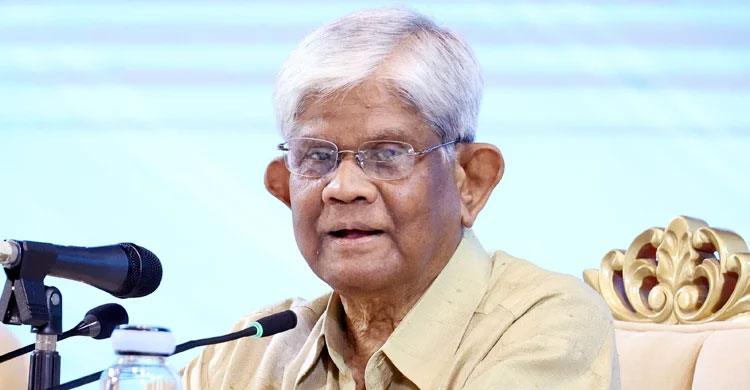
Finance Adviser Dr Salehuddin Ahmed today said that Bangladesh would import essentials such as rice from India if prices remain competitive, regardless of the prevailing political discourse between the two neighbouring countries.
Dr Salehuddin stressed that Bangladesh has never pursued punitive trade measures against India for political reasons. “We don’t believe in using trade as a tool for political retaliation. Our priority is to ensure supplies at the best possible price for our people,” he added.
The Finance Adviser was responding to the queries of reporters after chairing the 51st meeting of the Advisers Council Committee on Government Purchase in this year held today at the Cabinet Division Conference Room at Bangladesh Secretariat today.
He said Bangladesh continues to manage its relationship with India by clearly separating economic interests from political rhetoric, emphasising that trade decisions are guided by competitiveness and national interest rather than diplomatic sensitivities.
“Our trade policy is not driven by political considerations. If importing rice from India is cheaper than sourcing it from Vietnam or elsewhere, then it makes economic sense to buy from India,” he said.
On the broader state of Bangladesh–India relations, Dr Salehuddin acknowledged that political rhetoric, particularly during periods of heightened political activity, can sometimes appear strained.
However, he maintained that such statements do not reflect the actual state of bilateral ties.
“Political rhetoric is common, especially in public discourse. But, that doesn’t mean relations are deteriorating. Diplomacy involves many sensitive and nuanced aspects that are not always visible in public statements,” he said.
He dismissed concerns that relations with India had worsened, saying there was no abnormality in diplomatic or economic engagement between the two countries. “Nothing has gone bad. We are continuously working to maintain and improve relations,” he said.
Dr Salehuddin also said the interim government has no desire to see tensions between neighbouring countries.
“We don’t want any bitterness between the two nations. If anyone from outside is trying to instigate problems, that is not in the interest of either country,” he said, adding that both sides are mindful of national sentiments and the need for mutual respect.
He said Chief Adviser Prof Muhammad Yunus remains actively engaged in diplomatic efforts, including maintaining communication with individuals and institutions that have strong ties with India.
Highlighting Bangladesh’s regional outlook, Dr Salehuddin said the country believes strongly in regionalism and constructive engagement with all neighbours.
“India is our largest neighbour and a major partner in trade, health services and many other sectors. We also maintain good relations with Bhutan and Nepal, and are gradually improving ties with Pakistan,” he added.
He reiterated that Bangladesh can’t remain isolated and must work with countries in the region for shared prosperity. “Our economic and social interactions with India are extensive. These realities guide our approach, beyond temporary political narratives,” he said.