
Bangladesh’s banking sector sees surge in small deposits as ultra-rich exit post-changeover

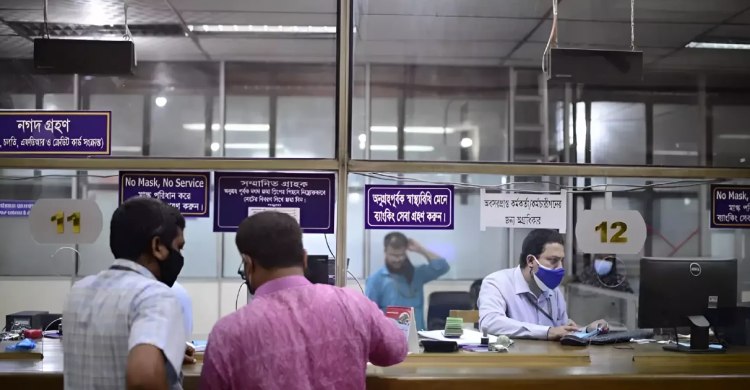
Bangladesh’s banking sector is experiencing a profound transformation, with a notable surge in small and lower-medium deposits coinciding with a sharp withdrawal of funds by the nation’s wealthiest depositors following the political changeover in August 2024.
According to Bangladesh Bank (BB) data, total deposits rose to Tk19.14 lakh crore by the end of September 2025, up from Tk17.41 lakh crore a year earlier, marking a year-on-year growth of 9.98 percent—the second-highest in 18 months.
August had recorded a slightly higher increase of 10.02 percent, a 17-month peak, reports UNB.
Experts suggest that this paradoxical growth—rising overall deposits despite the exodus of ultra-rich clients—reflects renewed public confidence in the formal banking system amid ongoing economic uncertainty.
Abdul Mannan, former executive director of Bangladesh Bank, told UNB, “Fixed-income groups and private sector pensioners are returning to the banking sector because banks are offering 10 to 11 percent returns on different term deposits. These depositors had previously left due to the single-digit interest rate policy of the former regime.”
Wealthy Depositors Withdraw Capital
While aggregate deposits are climbing, accounts holding Tk50 crore or more have plunged from 72 to 26 within a year. Similarly, accounts in the Tk25-50 crore range have been halved to 78.
Bangladesh Bank officials attribute this outflow to political and structural changes. “Large asset holders always make decisions based on the political environment. Therefore, it is natural for their funds to rapidly move elsewhere when the environment changes,” a senior official said.
The main drivers include:
· Political Vulnerability: Individuals associated with the previous government are reportedly seeking safe havens amid potential investigations.
· Bank Mergers and Uncertainty: The new government’s consolidation of weaker banks has prompted large withdrawals.
· Asset Diversification: Funds are moving to less-regulated avenues such as real estate, gold and informal transfers abroad (Hundi).
Syed Mahbubur Rahman, MD and CEO of Mutual Trust Bank, observed that the ultra-rich tend to monitor political stability closely and return to investment once confidence is restored.
Small Depositors Form the New Pillar
In contrast, small and middle-class depositors are becoming the backbone of the sector. BB statistics reveal significant growth in smaller accounts:
· Accounts holding Tk0-2 lakh rose to 14.76 crore from 13.28 crore in June 2024.
· Accounts holding Tk2-25 lakh increased to 1.02 crore from 88.77 lakh.
· Accounts in the Tk25-50 lakh bracket rose to 4.09 lakh from 3.64 lakh, while Tk50 lakh-1 crore accounts increased to 1.72 lakh from 1.59 lakh.
· Overall, the number of millionaires with Tk1 crore or more grew by 8,552 over the past year, although ultra-rich accounts have declined, suggesting a shift towards medium-level wealth accumulation.
Government Measures Reinforce Confidence
To strengthen depositor confidence, the government introduced the Deposit Protection Ordinance, 2025, guaranteeing refunds up to Tk2 lakh in the event of bank liquidation or bankruptcy. The Deposit Insurance Department issued directives detailing the framework on November 23, emphasising swift disbursement and enhanced risk management for small depositors.
“This has restored trust among small depositors, encouraging them to return to the banking system following the political transition,” Rahman said.
The developments indicate a structural shift in Bangladesh’s banking sector, as smaller depositors increasingly form the foundation of growth while the ultra-wealthy recalibrate their exposure in response to political and economic changes.