
Deadly explosion in eastern Congo leaves 30 killed amid army dispute with supportive militia

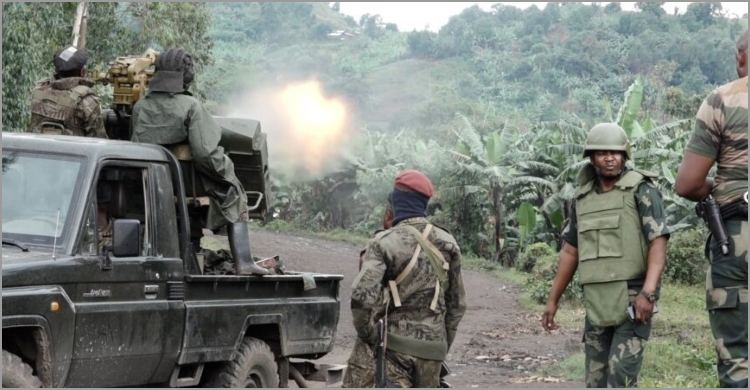
A bomb blast in eastern Congo killed more than 30 people and injured about 20 others after a confrontation between the Congolese army and a pro-government militia, despite a recently signed Washington peace deal that was hailed as a breakthrough.
Residents and civil society representatives told The Associated Press that the FARDC, Congo’s armed forces, and Wazalendo — a militia that has been fighting alongside the army — exchanged fire before the explosion shook the town of Sange in South Kivu on Sunday evening.
Eastern Congo remains destabilized by more than 100 armed groups competing for control in the mineral-rich region near Rwanda’s border, with the Rwanda-backed M23 rebels being the most prominent. The conflict has produced one of the world’s largest humanitarian crises, displacing more than 7 million people.
The blast occurred days after the U.S. finalized a peace agreement aimed at halting the conflict between the Congolese military and M23. But residents, civil society leaders and analysts say clashes continue unabated.
Faraja Mahano Robert, a community leader in Sange, said FARDC soldiers returning from the front line tried to move toward Uvira but were ordered to stop. When some refused, fighting broke out between the forces, followed by the deadly explosion. Many locals fled toward Burundi for safety.
Residents said the situation remained tense Monday. Amani Safari reported ongoing departures from Sange and new clashes between Wazalendo and FARDC early that morning. Another resident, David Kaserore, said civilians feel trapped and unable to distinguish between the army and armed groups, calling on the government to end the violence.
The military did not immediately comment.
Meanwhile, Congolese President Felix Tshisekedi accused Rwanda in a parliamentary speech of violating the peace deal, looting Congo’s natural resources, and undermining its institutions. Tshisekedi and Rwandan President Paul Kagame met with U.S. President Donald Trump in Washington last week to sign the agreement, which the White House praised as historic.
Tshisekedi claimed that Rwandan forces carried out heavy weapons attacks from the Rwandan town of Bugarama the day after the signing, calling it “proxy aggression” and rejecting suggestions of internal rebellion.
Burundi’s foreign minister, Edouard Bizimana, also accused Rwanda of duplicity, saying it signs agreements while escalating drone attacks on civilians. Burundi, which fights alongside the Congolese military against M23, warned Rwanda that repeat attacks could prompt legal action.
Rwandan officials did not immediately respond.
Despite the peace deal, residents reported intensified fighting in South Kivu last week. Both M23 and the Congolese army have repeatedly accused one another of breaching earlier ceasefire terms.
Earlier this year, M23 captured Goma and Bukavu, two major cities in eastern Congo. U.N. experts estimate the group is backed by roughly 4,000 Rwandan troops, and at times the rebels have threatened to advance all the way to the capital, Kinshasa, nearly 1,600 kilometers away.